
Trickle Down Healing
An Open Letter to the Psychedelic Community on Bicycle Day

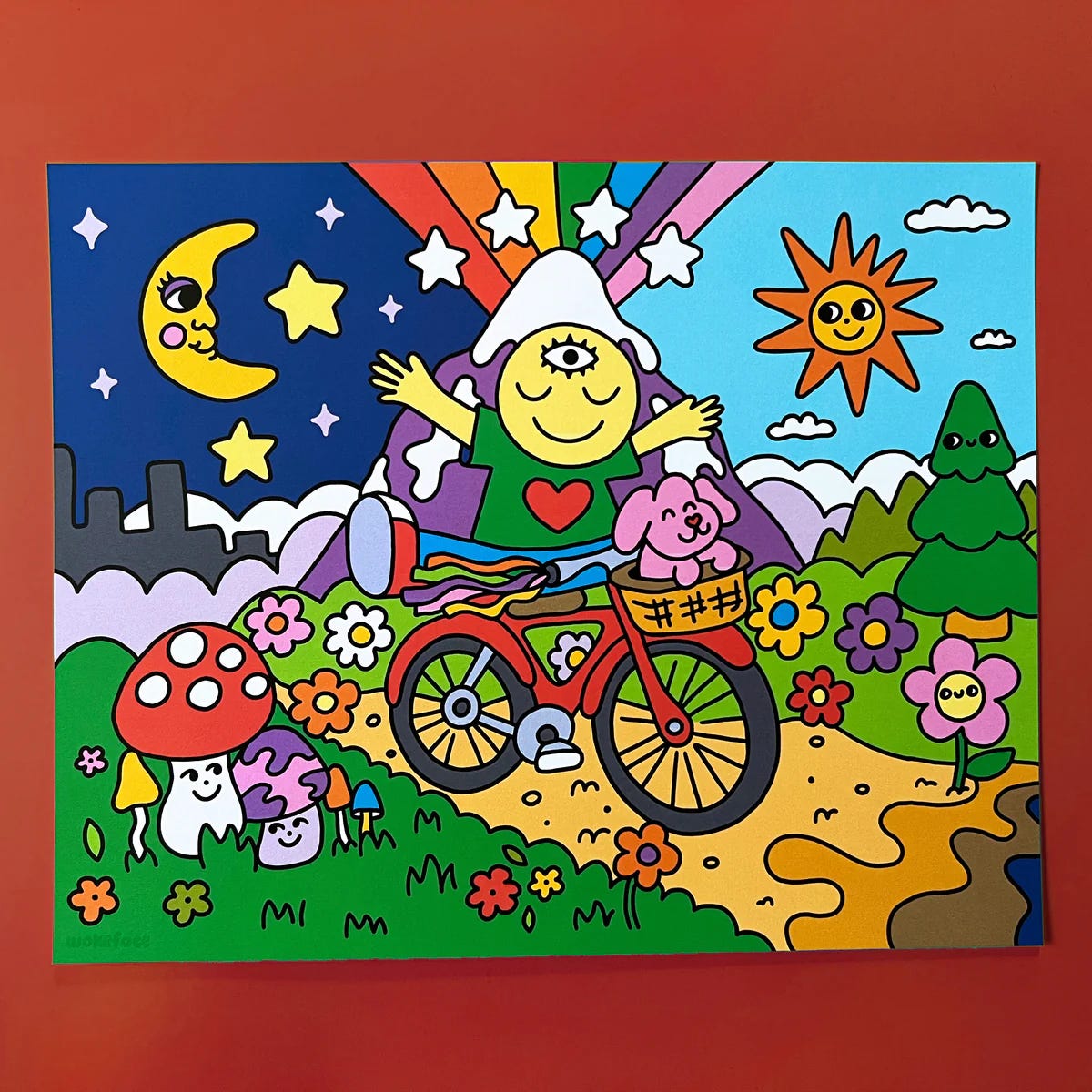
Today is Bicycle Day, the anniversary of the first intentional LSD trip in 1943, first observed in DeKalb, IL in the 80s. Today we celebrate a scientist on a humble bicycle, a moment of discovery that was profoundly human. But as I watch the “celebration” around yesterday’s Executive Order (EO), I don’t see that same spirit of discovery. Instead, I see a hollow gesture that ignores the systemic dismantling of the harm reduction foundation this entire movement was built on.
We see this clearly in the math of this administration. The $50mil of our tax dollars earmarked in the EO for a “high-tech” medicalized niche is a drop in the bucket for privatized pharmaceutical research to actually bring a product to market. Meanwhile, the Trump administration and Republican Congress have already slashed at least $345 million from federal programs that fund addiction and overdose prevention services, and nearly $1 trillion from Medicaid—the single largest source of addiction treatment funding in the U.S.
Last year overdose deaths dropped by 27%, the largest single-year decline ever, thanks in large part to the availability of naloxone, yet this administration is stopping naloxone from getting into the hands of as many people as possible. Harm reduction groups have been sounding the alarm nationwide since there has been at least $588 million in funding cuts for NIH drug, addiction, and overdose prevention research, and last year, SAMHSA’s workforce was reduced by one-third (300+ employees). This number includes regional staff providing crucial mental health services across the country.
Just like economics, “trickle-down” healing doesn’t work, it only keeps access in the hands of the medical elite by relying on models with high out of pocket costs and dependence on an unfavorable and increasingly inaccessible insurance system. If we want a bottom-up infrastructure that treats psychedelics like a public health tool and a fundamental community right, the focus on a state and local level has to remain on models that don’t depend on federal funds or “breakthrough” pharma designations, but push for grassroots, community-centered legislation that actually protects the marginalized.
Now let’s talk about how psychedelic exceptionalism, the ideology that psychedelics are inherently safer, more beneficial, or morally superior to other substances creates a double standard fueling a perception that white and middle-class psychedelic users are simply seeking enlightenment or therapy while users of other drugs are stigmatized and criminalized, perpetuating racial and socio-economic disparities by encouraging the increasing drug penalties for substances used by marginalized populations. No one talks about this more clearly than Dr. Carl Hart in Drug Use for Grown Ups.
Psychedelic exceptionalism also completely ignores the Indigenous history of psychedelic plants. That’s never more apparent than the emphasis this EO places on ibogaine with no mention of reciprocity to the culture in Gabon that has protected this plant for millennia. It does nothing to address the fact that the plant itself is being over-harvested and commodified by Western interests without benefit to its original stewards.
“Care for Veterans” is being used to further promote psychedelic exceptionalism. We must not take the bait! Many veterans don’t have access to basic healthcare and housing. Our current service people are rationing food because they don’t have the resources they need to go fight another endless war in the name of greed. I don’t disagree that veterans could benefit from access to psychedelics, I’ve been advocating for that for years, and have been saying the whole time that it has to be based on a foundation of harm reduction, and integrated with community care and real therapy, not “increased participation in clinical trials”.
My call to action for all of us who care about the equitable implementation of psychedelics into modern culture is simple: do not be distracted by performative gestures. Instead, stay focused on community driven models that actually meet the needs of our neighbors. Here in Illinois, we don’t need a one-size-fits-all model coming from the top down, we need Illinois-specific solutions like the ones that have already been proposed by the foremost experts and grassroots advocates in our state who understand that healing cannot be decoupled from harm reduction.
In honor of the spirit of the ride, stay grounded and keep moving forward.
With every word, a little less fear.
Jean
The opinions expressed here are my own and do not necessarily reflect the views or positions of any entities or organizations.
Grateful for your empathetic teachings and your big heart.